

HIGHLIGHT RESEARCH 
Having credible information is crucial for improving politicians’ decision-making. Existing research suggests that expanding the range of information and access to firsthand sources can enhance decision quality. However, quantitative evidence regarding the effect of information control, particularly on bureaucracies, remains scarce. Our study investigates an information monitoring reform within the Qing China bureaucracy in 1722. This reform enabled local officials in designated positions to report directly and confidentially to the emperor, thereby streamlining information flow and strengthening monitoring capabilities. Using a generalized difference-in-differences design, we find that the introduction of the information monitoring system surprisingly undermined the efficiency of governmental disaster relief allocation. Specifically, prefectures with more direct reporting positions were more likely to receive disaster relief programs, even in the absence of severe disasters. This bias arose from information overload caused by an expanded but uneven information supply, making the emperor more susceptible to being swayed by dominant information flows due to limited attention. Additionally, we identify a corrective mechanism for the emperor’s misjudgment. The emperor placed greater weight on the reports of trusted officials who shared his ethnicity or were members of the ruling class, thereby mitigating the negative effects of information overload. This study contributes to improving the understanding of the unintended consequences of bureaucratic information control.


This paper examines the importance of local knowledge for state building. Drawing upon the quantity and quality of local gazetteers, the regional encyclopedias of imperial China, we measure the accumulation of local knowledge in 267 prefectures over a millennium. We find that the gazetteers facilitated the local penetration of state power and infrastructure between 1000 and 1820, and continued to contribute to the modernization of state infrastructure during the period of reform between 1860 and 1911. Analyzing the content of gazetteers reveals that the gazetteer effect arises from the richness, concretization, and uniqueness of records of local characteristics. These findings indicate that the state is not merely built on unified and standardized measures but also on context-based local knowledge that increases the legibility of subjects.

This study exploits a special historical case-openings of treaty ports in 19th-century China to examine how upper-tail human capital, quantified via book creation, impacted modernization when facing external pressures. Employing a prefecture-level panel dataset from 1840 to 1904, the study establishes book density, indicative of knowledge endowment, as a significant and positive predictor of modern firm entry following the opening of treaty ports. To understand the mechanism, a critical aspect lies in understanding the Civil Service Examination (keju), an indigenous institution that historically dominated talent accumulation and allocation in China. By integrating data with keju, we find that exposure to Western influence mobilized the segment of upper-tail human capital at the bottom or outside of the keju system into entrepreneurship. This paper illustrates the dynamics between indigenous institutions and external pressures.

How can governments use redistribution to mobilize support for war? This paper shows that redistributive policies can increase political participation by altering the cost-benefit calculus of participation. I study a unique case of wartime land reform conducted by the Chinese Communist Party during the Chinese Civil War. Using newly digitized death records of more than 566,000 soldiers, I show that land redistribution increased death tolls on the extensive margin at the county-month level, but reduced fighting effort on the intensive margin when transfers were large—consistent with greater free-riding. However, both effects were driven by regions near enemy lines, where peasants faced higher risks of landlord reprisals. The findings highlight how strategic redistribution and violent class struggle interacted to reshape incentives for participation in collective violence. More broadly, the paper contributes to understanding how states engineer compliance during wartime through economic and coercive tools.

States often deploy public education to instill official ideology and advance state-building. Yet schooling can also enlighten and empower; when it reaches disadvantaged groups, it may nurture challengers to the state. This paper examines this paradox in the context of the Nationalist government’s 1930s expansion of tuition-free secondary teachers’ schools. Using a panel dataset covering 1,697 counties, we show that counties with more teachers’ schools were more likely to establish Chinese Communist Party (CCP) county committees from March 1938 onward, when the CCP resumed mass recruitment and readmitted intellectuals. Two mechanisms account for this pattern. First, tuition-free teachers’ schools created a pool of educated youth from non-elite backgrounds who, given their origins, were especially receptive to CCP appeals. Second, following the 1927 KMT–CCP split, many CCP intellectuals fled to the countryside and taught covertly, giving students at rural teachers’ schools greater exposure to communism.

We exploit differences in the hometowns of graduates from China’s first specialized legal university to estimate the effect of modern court establishment on local financial development. In response to the urgent need for legal modernization, Chaoyang University was founded in 1912 and graduated more than 3,000 legal professionals. Counties with varying numbers of Chaoyang graduates had different opportunities to access specialized knowledge-legal professionalism-and consequently varied prospects for establishing modern courts. The establishment of county-level courts has a significant positive impact on the development of local banking industries, which are heavily dependent on the local legal environment. This effect is achieved through the facilitation of standardized and specialized legal services and the strengthening of trust in modern financial institutions.

We construct a continuous decadal GDP dataset for China spanning 220 BCE to 1949 CE. Over more than two millennia, China’s economic trajectory exhibits a millennial-scale inverted U-shape: GDP per capita (1990 international dollars) rose from 380 in 220 BCE to a peak of 1,430 in 1000 CE, then entered a period of fluctuating decline after the Northern Song, stabilizing at around 550 by the early twentieth century. Our empirical analysis indicates that China’s long-run economic growth followed a Malthusian pattern. The key difference between the first and second millennia lies in the emergence of severe land–population pressures during the latter, coupled with weak performance in human capital accumulation and technological progress. Chinese history demonstrates that long-term economic growth has been fundamentally knowledge-driven.

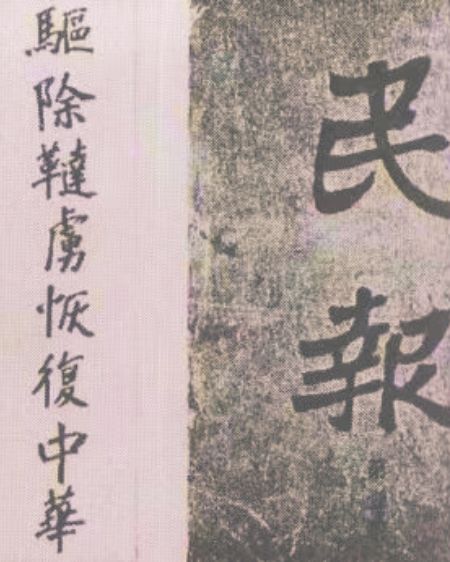
Nations are products of modernity, but they also have historical roots. In the conquest of China in the mid-17th century, the Manchu-led Qing government oppressed the Han Chinese, the native population of China. Two centuries later, when modern newspaper technology became available, revolutionary propagandists exploited these events, reframing the political repression as ethnic conflict to ignite nationalist fervor.
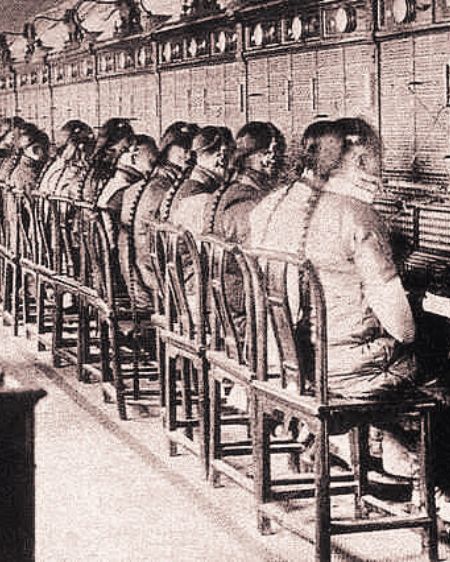
The impact of modern information technology on state capacity is relatively underresearched. This paper explores the introduction of the telegraph in the late 19th-century China, the purpose of which were mostly military, to quantify the impact of information technology on state’s capacity to obtain local information about natural disasters and to provide famine relief.