
Centre for Quantitative History

Image of <h5><strong>ANCIENT ROOTS FROM QUANTITATIVE PERSPECTIVES</strong></h5>
ANCIENT ROOTS FROM QUANTITATIVE PERSPECTIVES

Explores prehistoric and historical China through archaeological data and discoveries. 

Led by Professor Zhiwu Chen, Ancient Roots from Quantitative Perspectives Research Cluster examines China’s development trajectory, demographic changes, and social/political/economic evolution through archaeological data and early indicators of land use.
Image of <h5><strong>CULTURE, RELIGION AND LONG-TERM CONSEQUENCES</strong></h5>
CULTURE, RELIGION AND LONG-TERM CONSEQUENCES

Examines religious interactions and economic impact on China's development. 

Led by Professor Cameron Campbell, the Culture, Religion and Long-Term Consequences Research Cluster explores Confucianism as economic institutions, shedding light on its contributions throughout Chinese history and its paradoxical role in modernisation.
Image of <h5><strong>STATE CAPACITY, INSTITUTIONS AND DEVELOPMENT</strong></h5>
STATE CAPACITY, INSTITUTIONS AND DEVELOPMENT

Quantifies state capacity in historical China, examining evolution and impact on outcomes. 

Led by Professor Debin Ma, the State Capacity, Institutions, and Development Research Cluster quantifies state capacity in historical China, examining its evolution, regional variations, and impact on social and economic outcomes.
Image of <h5><strong>FINANCIAL HISTORY, TRADE AND THE RISE OF HONG KONG AS A FINANCIAL CENTRE</strong></h5>
FINANCIAL HISTORY, TRADE AND THE RISE OF HONG KONG AS A FINANCIAL CENTRE

Examines China's financial development, historical influences, and trade dynamics. 

Led by Professor Chicheng Ma, the Financial History, Trade and the Rise of Hong Kong analyses the impact of Confucian and institutional factors on financial markets, their interaction with modern institutions and laws, and Hong Kong's emergence as a global financial centre.
Image of <h5><strong><span style="color: #002349;">ANCIENT ROOTS FROM QUANTITATIVE PERSPECTIVES</span></strong></h5>
ANCIENT ROOTS FROM QUANTITATIVE PERSPECTIVES

Explores prehistoric and historical China through archaeological data and discoveries. 

Led by Professor Zhiwu Chen, Ancient Roots from Quantitative Perspectives Research Cluster examines China’s development trajectory, demographic changes, and social/political/economic evolution through archaeological data and early indicators of land use.
Image of <h5><strong><span style="color: #002349;">CULTURE, RELIGION AND LONG-TERM CONSEQUENCES</span></strong></h5>
CULTURE, RELIGION AND LONG-TERM CONSEQUENCES

Examines religious interactions and economic impact on China's development. 

Led by Professor Cameron Campbell, the Culture, Religion and Long-Term Consequences Research Cluster explores Confucianism as economic institutions, shedding light on its contributions throughout Chinese history and its paradoxical role in modernisation.
Image of <h5><strong><span style="color: #002349;">STATE CAPACITY, INSTITUTIONS AND DEVELOPMENT</span></strong></h5>
STATE CAPACITY, INSTITUTIONS AND DEVELOPMENT

Quantifies state capacity in historical China, examining evolution and impact on outcomes.

Led by Professor Debin Ma, the State Capacity, Institutions, and Development Research Cluster quantifies state capacity in historical China, examining its evolution, regional variations, and impact on social and economic outcomes.
Image of <h5><strong><span style="color: #002349;">FINANCIAL HISTORY, TRADE AND THE RISE OF HONG KONG</span></strong></h5>
FINANCIAL HISTORY, TRADE AND THE RISE OF HONG KONG

Examines China's financial development, historical influences, and trade dynamics. 
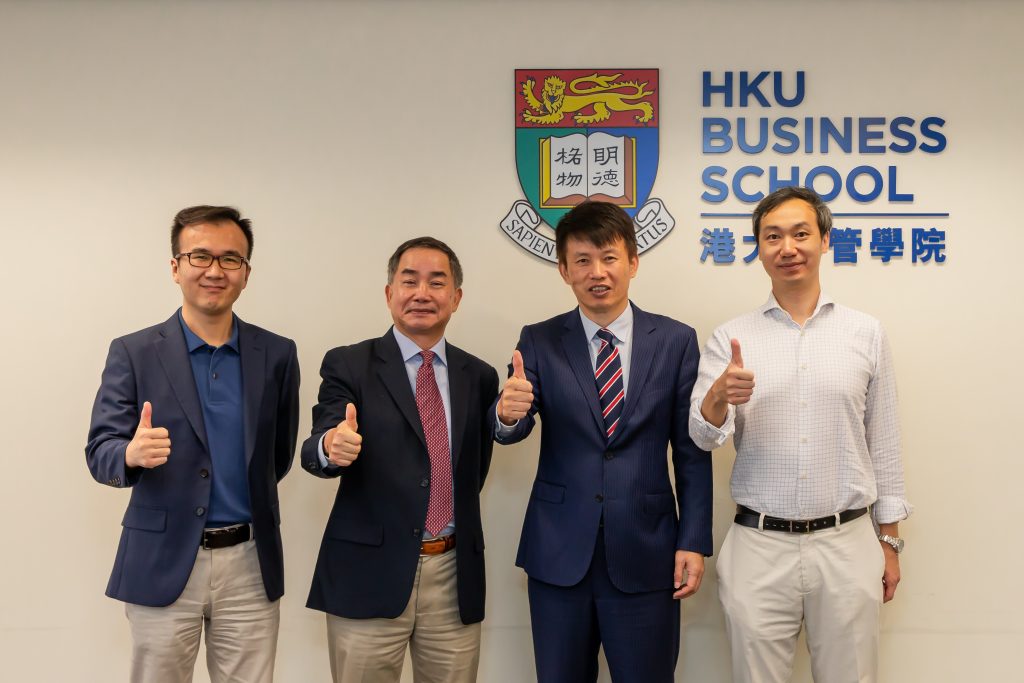
Led by Chicheng Ma, the Financial History, Trade and the Rise of Hong Kong analyses the impact of Confucian and institutional factors on financial markets, their interaction with modern institutions and laws, and Hong Kong's emergence as a global financial centre.

Area of Excellence (AoE) Project

Quantitative History of China:
Historical Roots of Recent Success and Future Development

“Uniquely among nations, China has a wealth of historical and archaeological archives covering almost all aspects of society, from politics to business, law and regulation, crime and unrest, family and lineage, culture and customs, religion and social organisation and science. Many of these records have been recently digitised, offering quantitative historians an unprecedented opportunity to re-examine various aspects of China’s past.”


Professor Zhiwu Chen
Project Coordinator

News Highlights

Image of

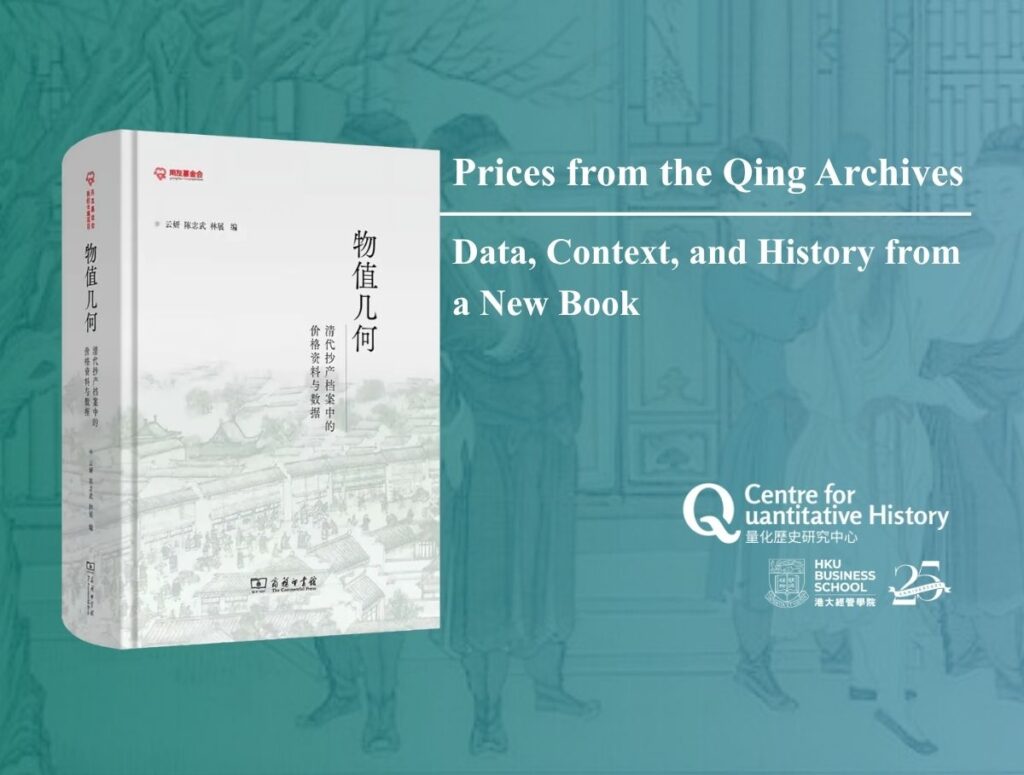
We are delighted to present《物值幾何:清代抄產檔案中的價格資料與數據》—a major scholarly work that brings together rich historical records and rigorous data-based analysis. Written by our Director, Zhiwu Chen, as well as our Co-Principal Investigator, Zhan Lin, together with their co-author, Yan Yun, the book offers a systematic approach to understanding Qing-dynasty asset and commodity values.
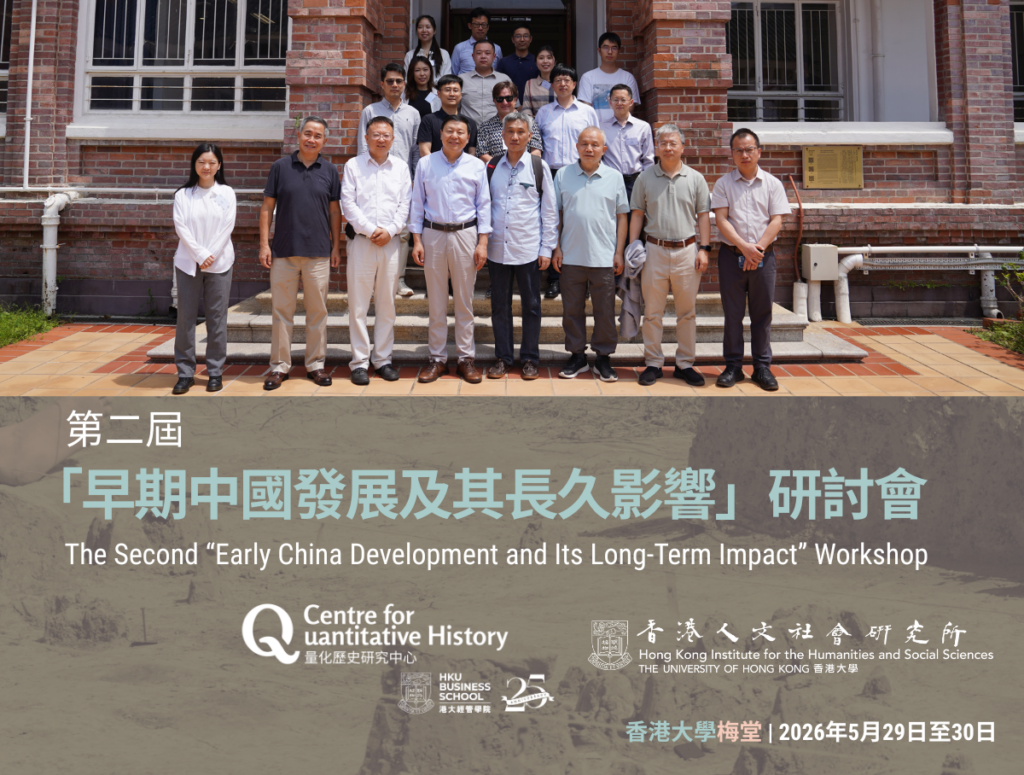
Image of

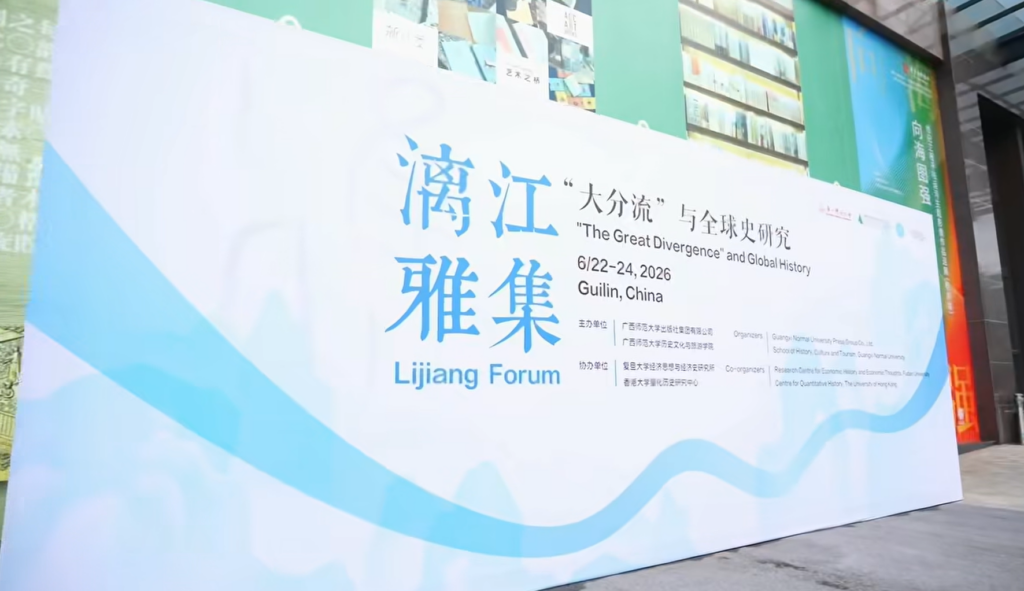
Co-organised by the Centre for Quantitative History (CQH) and the HK Institute for the Humanities and Social Sciences (IHSS), the workshop brought together archaeologists, historians, economists and legal scholars to explore how new data, quantitative methods and archaeological evidence are reshaping the study of early China.

Image of

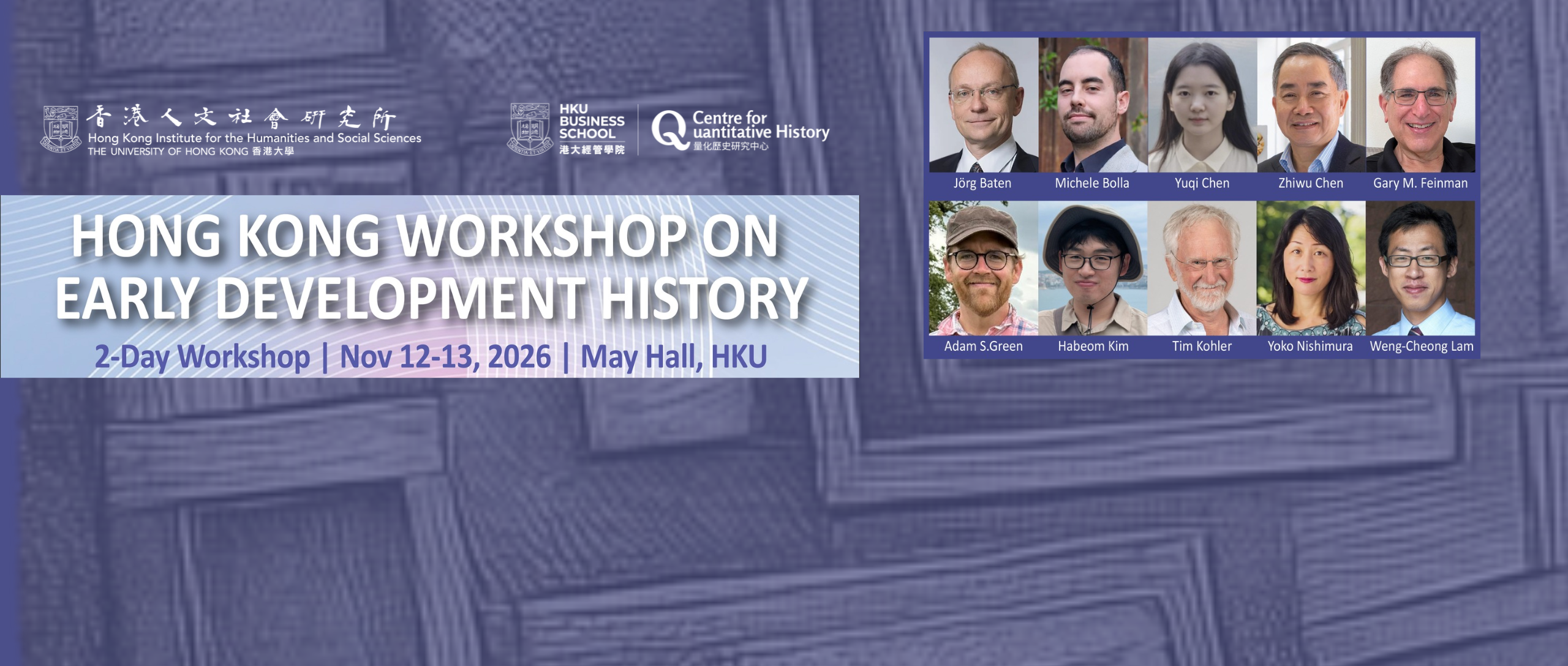
Deadline: April 20, 2026 | We now invite submissions of research papers on all relevant historical topics using quantitative approaches including but not limited to economic and social history, political history, cultural history, business and financial history and archival history. Submitted papers can be either in English or Chinese. Submissions must be unpublished and original. Discussants will be assigned for each accepted submission.

Image of

面對這樣的世界,人們難免疑惑:人類社會是否仍有出路?回望從春秋戰國到今日世界的歷史軌跡,我們或許能更清楚地看見,技術變革如何撕裂社會,並重新塑造秩序。

Image of

Our director’s research is cited in FPIF’s analysis. The article written by Jianlu Bi, “Why the War in Iran Defies a Quick End” analyses escalation pressures, regional incentives, and the limits of quick resolutions, drawing on this scholarship to illuminate why a rapid end is unlikely.

Next Slider

Join Upcoming Events

There is Currently no Upcoming Event, you can review our past event from Event Overview Page.

Quick Access

Begin your discovery with just one click, effortlessly.

Image of <h6><strong>Life at HKU</strong></h6>
Life at HKU
Read More

Explore vibrant campus life and community engagement

Image of <h6><strong>Our Experts</strong></h6>
Our Experts
Read More

Access interdisciplinary insights from quantitative historians

Image of <h6><strong>Publications</strong></h6>
Publications
Read More

Discover our collection of  
research outputs

Image of <h6><strong>Latest Event Recordings</strong></h6>
Latest Event Recordings
Read More

Stay updated with recorded presentations and lectures 

Image of <h6><strong>Training</strong></h6>
Training
Read More

Enhance your quantitative skills through specialised programmes 

Image of <h6><strong>FAQs</strong></h6>
FAQs
Read More

Find answers to common questions 

Image of <h6><strong>Life At HKU</strong></h6>
Life At HKU
Read More

Explore vibrant campus life and community engagement 

Image of <h6><strong>Our Experts</strong></h6>
Our Experts
Read More

Access interdisciplinary insights from quantitative historians 

Image of <h6><strong>Latest Event Recordings</strong></h6>
Latest Event Recordings
Read More

Stay updated with recorded presentations and lectures

Image of <h6><strong>Training</strong></h6>
Training
Read More

Enhance your quantitative skills through specialised programmes